

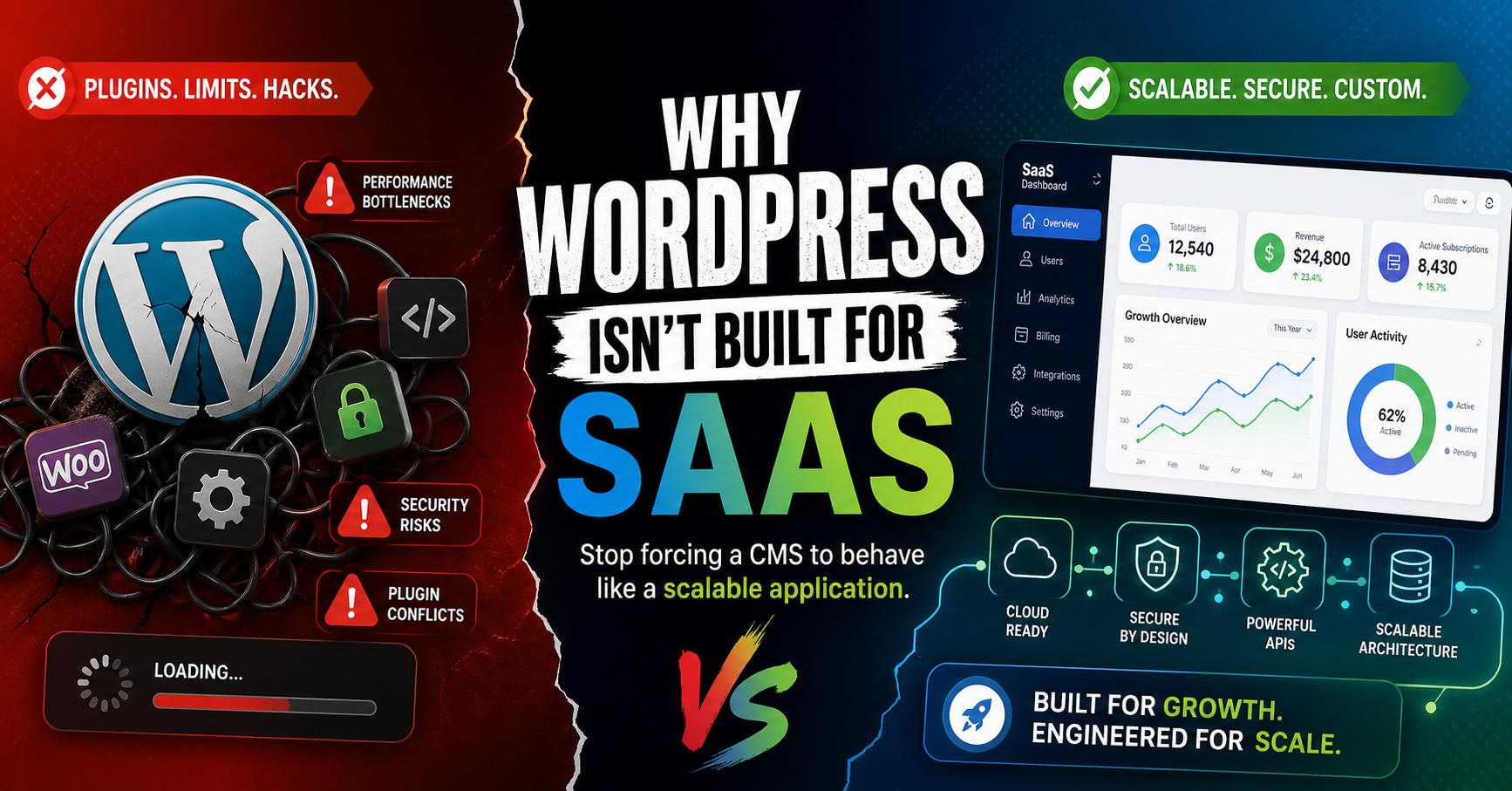
WordPress powers over 40% of the web—and for good reason. It’s flexible, easy to use, and excellent for content-driven websites. But when it comes to building a SaaS (Software as a Service) product, WordPress often isn’t the best choice.
Let’s break down why.
1. WordPress Is Built for Content, Not Applications
At its core, WordPress is a CMS (Content Management System). SaaS platforms, on the other hand, are dynamic applications that require complex user interactions, real-time processing, and scalable architecture. Trying to force WordPress into this role can quickly become messy and inefficient.
2. Scalability Challenges
SaaS products need to scale seamlessly as users grow. WordPress, especially when heavily customized with plugins, can struggle under high traffic and complex operations. Performance bottlenecks and database limitations become real concerns.
3. Plugin Dependency = Technical Debt
To build SaaS-like features in WordPress, developers often rely on multiple plugins. This creates a fragile ecosystem where updates, conflicts, and security vulnerabilities are constant risks. Maintaining such a system becomes time-consuming and costly.
4. Limited Flexibility for Complex Logic
SaaS platforms often require custom workflows, advanced permissions, APIs, and integrations. While WordPress can be extended, it’s not designed for deep application logic. Frameworks like Laravel, Node.js, or Django offer far better control and structure for these needs.
5. Security Concerns
Because of its popularity, WordPress is a common target for attacks. When you add multiple plugins and custom code, the attack surface increases. SaaS products, especially those handling user data, demand a more robust and controlled security approach.
6. Poor Fit for Real-Time Features
Modern SaaS apps often include real-time features like notifications, live updates, or collaboration tools. WordPress isn’t built for real-time processing, and implementing it requires significant workarounds.
So, What Should You Use Instead?
For SaaS development, consider modern frameworks and stacks like:
- Laravel (PHP) – Great for structured, scalable backend systems
- Node.js – Ideal for real-time, high-performance applications
- Django (Python) – Secure and robust for data-heavy platforms
- React / Vue – For building dynamic, interactive frontends